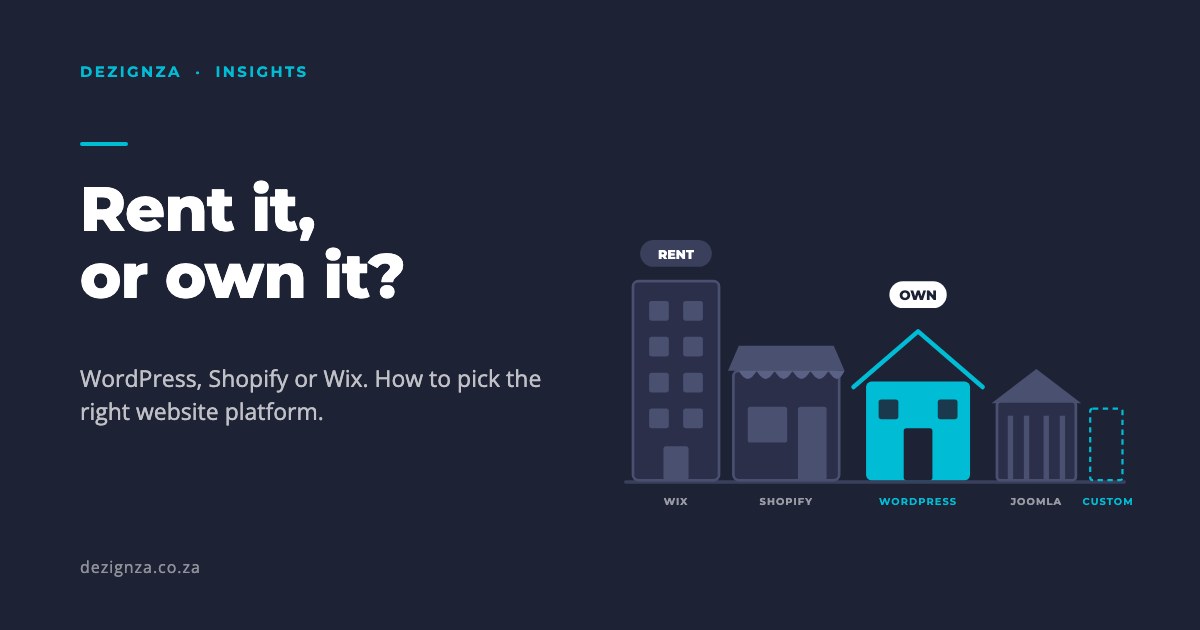
There is no best website platform, only the best fit. Wix and Squarespace are renting, Shopify is a shop in a mall, WordPress is owning, and a custom build is designing your own home.
- WordPress runs about 4 in every 10 websites, and you own what you build on it
- Wix and Squarespace are the easiest to start on, and the hardest to leave
- Shopify is built for selling, but in South Africa it adds 2% per sale on its Basic plan
- When you need bookings, portals or quotes with your own rules, you have outgrown the platform
Ask five people which platform to build your website on and you will get five answers. Your nephew swears by Wix. Your accountant’s site is on Squarespace. The agency down the road only does WordPress. And anyone selling online says Shopify.
- WordPress
- Shopify
- Wix
- Squarespace
- Joomla
They are all right, for someone. The trick is knowing which one is right for you, before you spend a year building on the wrong one.
First, what is a CMS?
CMS stands for content management system. In plain words, it is the part of your website that lets you change things yourself: add a blog post, swap a photo, update a price, all without calling a developer.
How many are there? Hundreds. One tracking service follows around 290 of them, and that is only the ones it can spot. But the top of the table is far less crowded.
- WordPress39.6%
- </>No CMS at allabout 1 in 3
- Shopify5.3%
- Wix4.2%
- Squarespace2.4%
- Joomla1.1%
- Webflow0.8%
Source: W3Techs, 18 October 2026.
- ~290website platforms followed by one tracking serviceWmtips, and only the ones it can spot
- 4 in 10websites run on WordPress alone39.6% of all websites
- 1 in 3websites use no CMS at allHand-built or custom code
Renting vs owning: the easy way to think about it
Choosing a website platform is a lot like choosing where your business lives.
Wix and Squarespace
A furnished rental flat
Move in today, everything works, and the landlord fixes the geyser. But you pay rent every month, you redecorate within their rules, and when you move out, the furniture stays behind.
Shopify
A shop in a busy mall
Tills, security and shelving are ready on day one, all built for selling. The mall charges rent, takes a cut of sales, and you trade on its terms.
WordPress
Buying a house
It is yours. Extend it, renovate it, or move it to a new host whenever you like. But maintenance is your job, and a neglected house springs leaks.
Joomla
An older house on a quiet street
Solid bones, but fewer builders in town who know how to work on it.
{ }A custom build
Designing your own home
Built around exactly how you live. More planning up front, and no compromises later.
The top 5, side by side
Ranked by how many websites use them, as of October 2026.
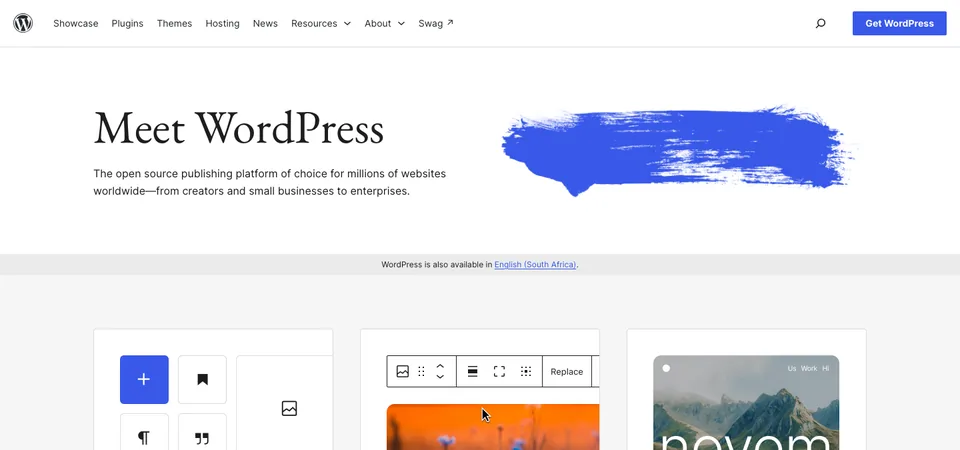
WordPress
- Best for
- Almost anything, from a blog to a big business site
- Beginner-friendly
- Medium
- You own it
- Yes
- Watch out for
- Updates and security need regular care

Shopify
- Best for
- Online shops
- Beginner-friendly
- Easy
- You own it
- No
- Watch out for
- Billed in US dollars, plus an extra fee per sale in South Africa
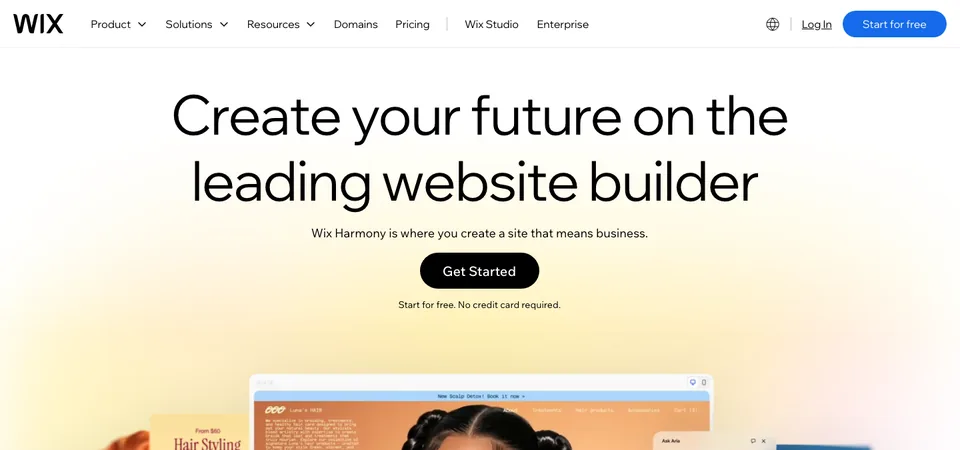
Wix
- Best for
- Small business sites you build yourself
- Beginner-friendly
- Very easy
- You own it
- No
- Watch out for
- Hard to move away from later
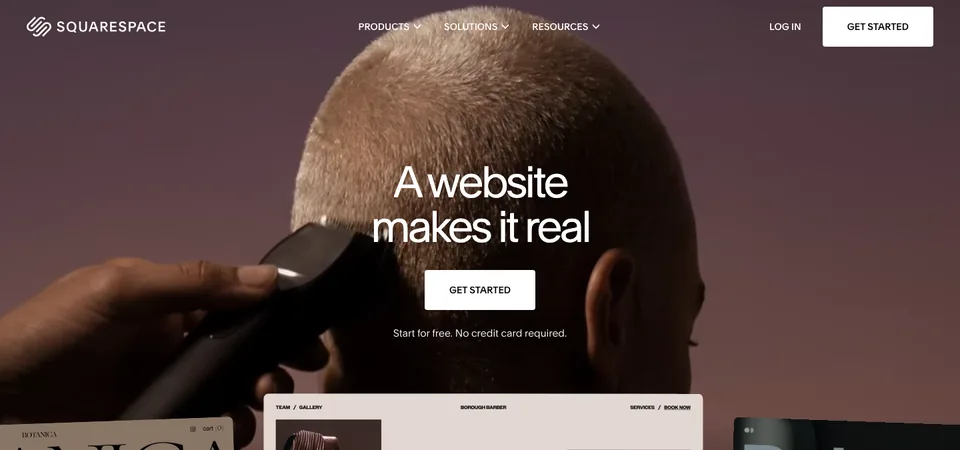
Squarespace
- Best for
- Portfolios and image-led brands
- Beginner-friendly
- Easy
- You own it
- No
- Watch out for
- Fewer add-ons when you need more
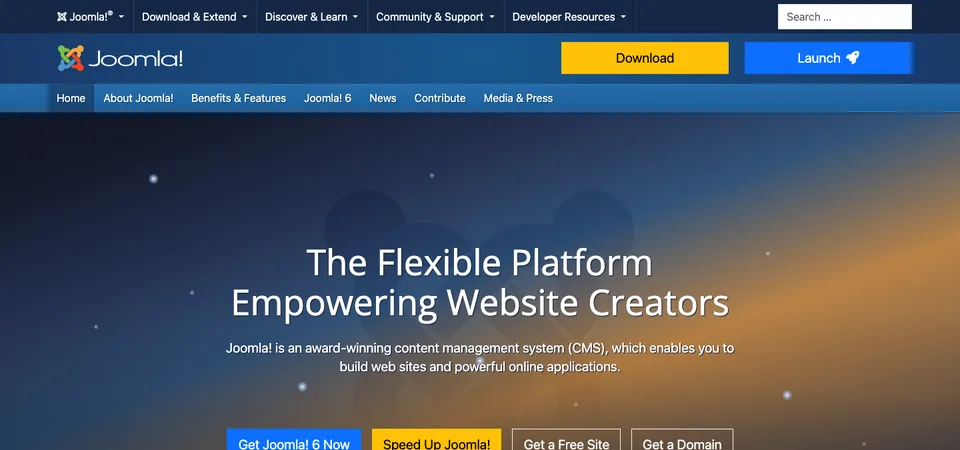
Joomla
- Best for
- Complex sites with technical teams
- Beginner-friendly
- Hard
- You own it
- Yes
- Watch out for
- Far fewer developers and add-ons than WordPress
Source: W3Techs, 18 October 2026. Screenshots: each platform’s own home page, October 2026.
Quick picks
Need a simple site and want to do it yourself?
Wix or Squarespace. Pick Squarespace if looks matter most.
Selling products online?
Shopify is built for it, but do the maths first. See below.
Want room to grow, and to own what you build?
WordPress. It is the safest long-term bet, as long as someone looks after it.
Already on Joomla?
No need to panic, but plan your next move before it becomes urgent.
Need it to do something none of them do?
{ }Read on. That is where a custom web app comes in.
Shopify’s own payment system is not available in South Africa, so you use a local gateway like PayFast, and Shopify adds 2% per sale on its Basic plan, on top of the gateway’s own fee. WordPress with WooCommerce avoids that extra cut.
- R200extra a month on R10 000 of salesShopify Basic’s 2%, before gateway fees
- R2 000extra a month on R100 000 of salesSame 2%, on a busier month
- R0platform cut on WooCommerceYou still pay the gateway’s own fee
New kids on the block
The top 5 are not the whole story. A few newer names are worth knowing, even if your neighbours have not heard of them yet.
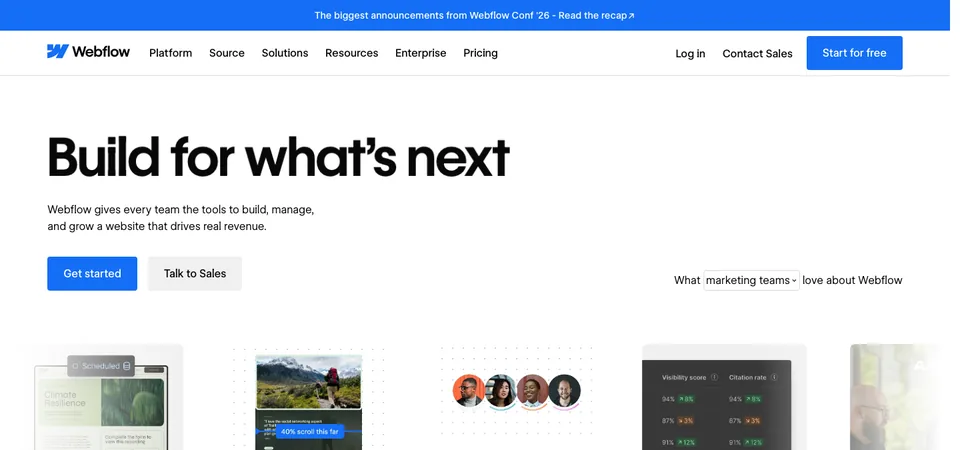
Webflow
An architect-designed rental
A favourite of web designers, with full visual control over every detail. It is still renting, and you pay per site, but nothing looks like a template. It sits joint sixth, on 0.8% of all websites.
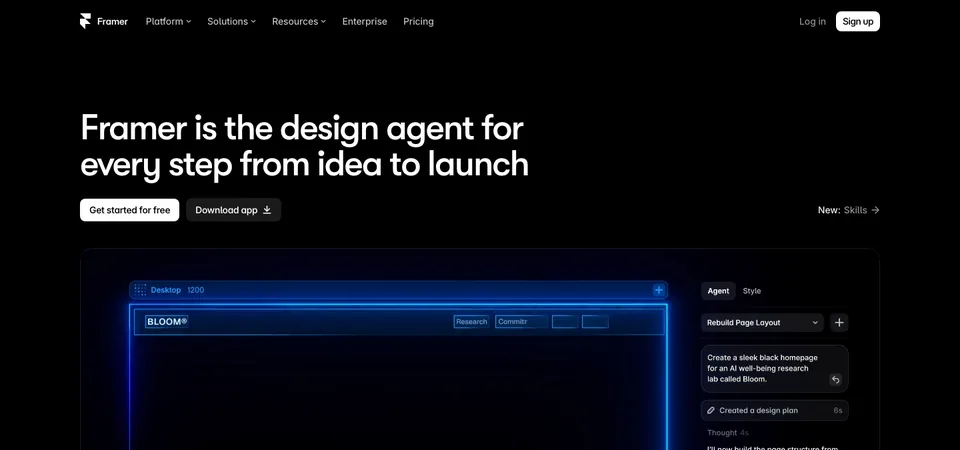
Framer
A pop-up studio
Built for striking, design-led sites that go live fast. Popular with startups and product launches.
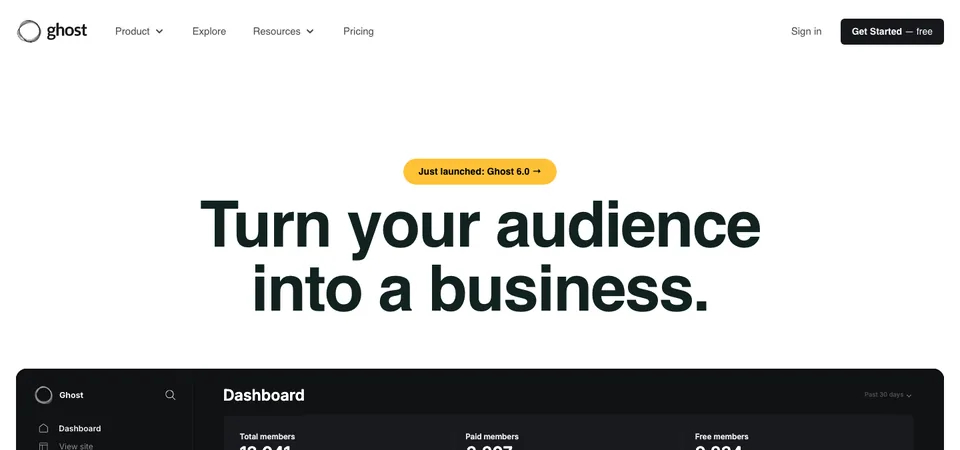
Ghost
A printing press
Made for writers and publishers, with blogs, memberships and paid newsletters built in.
Lovable and v0
Instant prefab homes
AI app builders that now show up in the rankings as platforms. Impressively quick to put up, but they carry the same risks as any software built without an experienced eye.
Sanity, Payload and Strapi
The engine room
Visitors never see them. Developers use them behind custom-built sites and apps, so the business gets an easy editing screen while the site itself is built exactly to spec.
Source: W3Techs, 18 October 2026.
When none of them fit
Every platform here is built for the common case: pages, a blog, a shop. The moment your business needs something specific, like bookings with your own rules, a client portal, quotes that calculate themselves, or one system that connects your stock, staff and customers, you start bolting on plugins and paying monthly for apps that almost do the job.
That is the sign you have outgrown the platform.
The answer is not always a full custom build. Often it is your website on WordPress, with a custom web app beside it for the part of the business that actually makes you money.
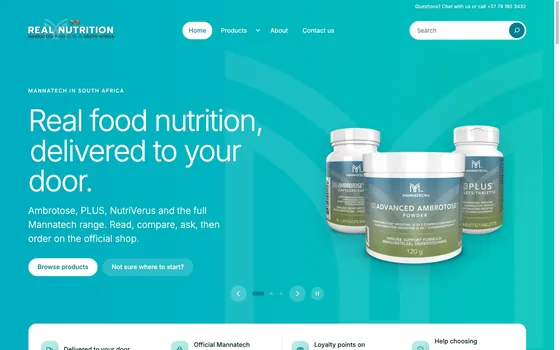 WordPressReal NutritionA 57-product catalogue on a WordPress block theme, edited by the client.
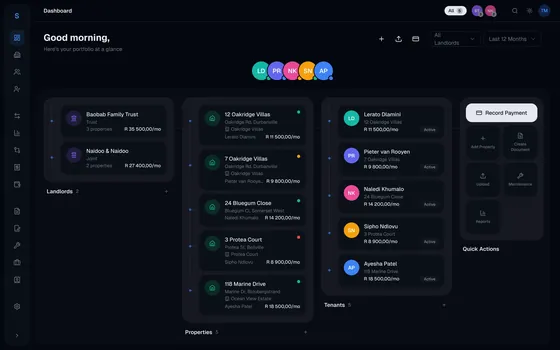 { }Custom web appLettoBank statements, bills and leases turned into clean books. No platform does that.
The bottom line
There is no best platform, only the best fit. Most businesses do well on one of these five. The costly mistake is choosing on hearsay and finding out two years later.
Already on WordPress and tired of looking after it? We take care of hosting and upkeep too.
Not sure which fits?
Tell us what your website has to do and we will tell you which of these it is. Sometimes the answer is less than you expected.
- W3Techs, CMS usage and market share, 18 October 2026.
- Wmtips, CMS platforms tracked.
- Folio3, Shopify pricing in South Africa, April 2026.